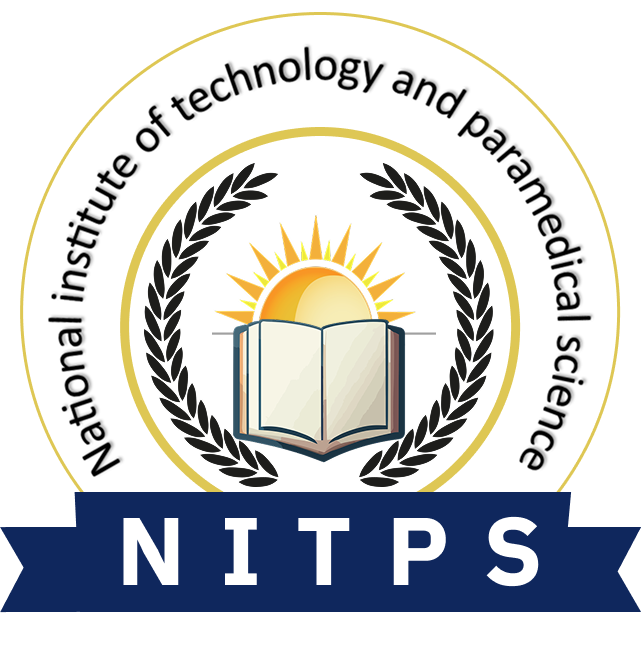
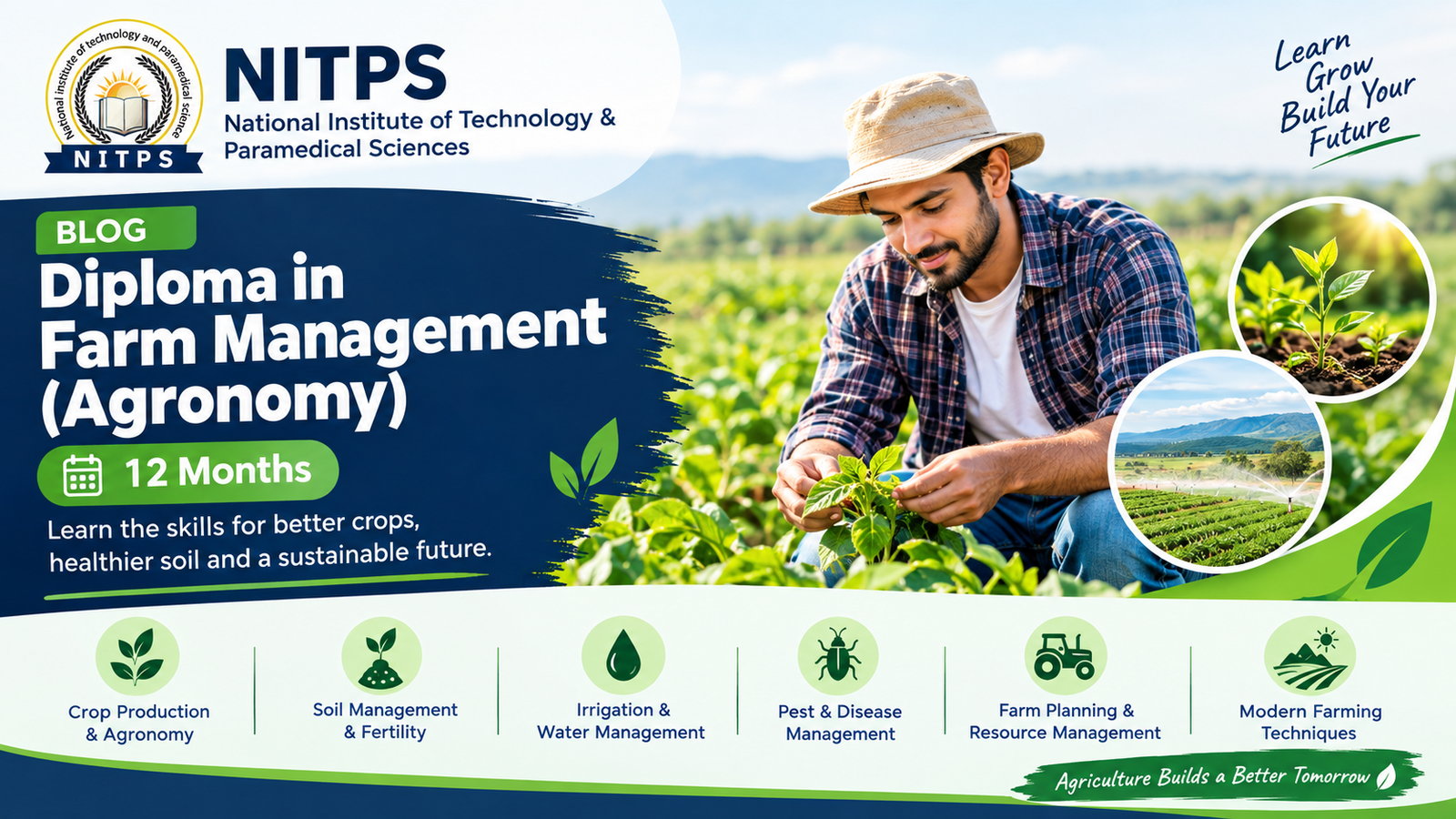
Agriculture plays an important role in food production, rural development, and the economy. As farming practices continue to evolve, knowledge of crop production, soil fertility, irrigation, pest management, and agricultural planning is becoming increasingly valuable. For learners interested in agriculture and modern farming, the Diploma in Farm Management (Agronomy) – 12 Months offered by the National Institute of Technology & Paramedical Sciences (NITPS) is a course to explore.
This diploma course introduces learners to important concepts in agronomy and farm management. It focuses on understanding agricultural operations, efficient resource utilization, crop care, and sustainable farming practices. Learners who want to develop foundational knowledge of agriculture and farm operations can explore this program as part of their educational journey.
What Is a Diploma in Farm Management (Agronomy)?
A Diploma in Farm Management (Agronomy) is a course focused on the principles involved in crop cultivation, soil management, irrigation, agricultural resource planning, and farm operations. Agronomy is a branch of agricultural science concerned with crop production and the management of soil and other resources needed for healthy plant growth.
Farm management complements agronomy by focusing on planning, organizing, and managing agricultural activities efficiently. Together, these subjects help learners understand how farming operations are planned and how agricultural resources can be used responsibly.
The 12-month Diploma in Farm Management (Agronomy) at NITPS is designed for people who want to build their understanding of agricultural management and modern farming techniques.
Key Features of the Diploma Course
The program covers important areas related to agriculture and farm operations. Key learning areas include:
• 12-Month Diploma Course: A structured learning opportunity for individuals interested in farm management and agronomy.
• Crop Production: Understand the basic principles of crop growth, cultivation, and crop care.
• Soil Preparation and Fertility: Learn about soil conditions, soil fertility, and nutrient management.
• Irrigation and Water Management: Explore irrigation methods and the importance of managing water resources.
• Pest and Disease Management: Develop an understanding of common crop pests, plant diseases, and their management.
• Farm Planning: Learn about agricultural planning, resource allocation, and the organization of farming activities.
• Modern Farming Techniques: Explore contemporary agricultural practices and sustainable farming concepts.
• Agricultural Resource Management: Understand the importance of using land, water, and other farming resources efficiently.
These learning areas provide a foundation for understanding the different activities involved in agricultural production and farm operations.
What Will You Learn During the Course?
1. Fundamentals of Crop Production
Crop production involves selecting suitable crops, preparing the land, planting seeds, maintaining crops, and managing harvesting activities. Understanding these steps helps learners appreciate the processes involved in growing healthy crops.
The course introduces the fundamentals of agronomy and the factors that influence crop growth and agricultural productivity.
2. Soil Management and Fertility
Soil is one of the most important resources in agriculture. Soil structure, nutrient availability, moisture, and fertility influence plant development and crop performance.
Learners explore the importance of soil preparation, soil fertility, and nutrient management. This knowledge supports a better understanding of soil conservation and responsible agricultural practices.
3. Irrigation and Water Management
Water management is essential for maintaining crop growth, particularly in areas affected by irregular rainfall or water shortages. Different irrigation methods can help farmers supply water according to crop requirements and local conditions.
Understanding irrigation and water management introduces learners to the importance of efficient water use and responsible agricultural resource planning.
4. Pest and Disease Management
Crop pests and plant diseases can affect agricultural productivity and crop quality. Identifying potential problems and understanding appropriate management methods are important parts of crop care.
The course introduces learners to the fundamentals of pest and disease management and the role of monitoring, prevention, and responsible crop protection practices.
5. Farm Planning and Agricultural Operations
Successful farm management involves organizing agricultural activities, managing available resources, and planning work according to seasonal and operational requirements.
Learners explore the principles of farm planning, agricultural resource management, and the coordination of everyday farming activities.
6. Modern and Sustainable Farming Practices
Modern agriculture increasingly emphasizes efficient resource use, soil conservation, water management, and sustainable crop production.
Learning about modern farming techniques helps students understand how agricultural practices can be adapted to changing environmental conditions and the needs of agricultural communities.
Who Can Consider This Course?
The Diploma in Farm Management (Agronomy) may be worth exploring for:
• Students interested in agriculture and agronomy.
• Individuals seeking foundational knowledge of farm management.
• People interested in crop production and agricultural operations.
• Learners who want to understand soil, irrigation, and crop care.
• Individuals interested in modern farming techniques and sustainable agriculture.
• People looking to expand their knowledge of agricultural resource management.
Prospective students should contact NITPS to confirm the current eligibility requirements, admission procedure, and course delivery details before enrolling.
Career Opportunities After Studying Farm Management
Knowledge of agronomy and farm management can be relevant to several agriculture-related activities. Depending on an individual's qualifications, practical experience, local requirements, and additional training, possible areas to explore include:
• Farm operations and supervision support.
• Crop production assistance.
• Agricultural field support.
• Irrigation and farm resource management support.
• Agricultural input and service businesses.
• Rural development and agricultural project support.
• Farm planning and agricultural operations coordination.
A diploma alone does not guarantee employment or professional eligibility for a particular position. Career opportunities depend on the employer, the role, practical experience, and any additional qualifications required.
Why Learn About Modern Farm Management?
Agriculture involves more than planting and harvesting crops. It requires an understanding of soil conditions, water availability, crop requirements, seasonal planning, and the efficient use of resources.
Learning the fundamentals of farm management can help individuals better understand agricultural operations and the challenges faced by farmers. It can also provide useful background for people interested in agricultural entrepreneurship, farm-related services, and rural development.
Knowledge of sustainable agriculture is particularly relevant as farming communities work to conserve resources, maintain soil health, and adapt to changing weather conditions.
Why Explore NITPS for a Diploma in Farm Management (Agronomy)?
The National Institute of Technology & Paramedical Sciences (NITPS) offers the Diploma in Farm Management (Agronomy) as a 12-month learning option for individuals interested in agriculture and farm operations.
Learners can explore the course to develop foundational knowledge of crop production, soil management, irrigation, pest control, farm planning, and modern agricultural practices.
Before making an admission decision, prospective learners should review the official course information and contact the institute to confirm the curriculum, eligibility criteria, learning format, fees, and certificate details.
Frequently Asked Questions (FAQs)
1. What is the duration of the Diploma in Farm Management (Agronomy) at NITPS?
The course is listed as a 12-month diploma program.
2. What subjects are covered in Farm Management (Agronomy)?
Key learning areas include crop production, soil preparation, soil fertility, irrigation, pest and disease management, farm planning, agricultural resource management, and modern farming techniques.
3. Who should consider a Diploma in Farm Management?
The course may interest learners who want foundational knowledge of agriculture, agronomy, crop cultivation, and farm operations. Applicants should confirm the institute's current eligibility requirements.
4. Can this course help me understand modern agriculture?
The course introduces important agricultural concepts, including crop production, water management, soil fertility, and sustainable farming practices.
5. What career areas may be relevant after the course?
Depending on individual qualifications and experience, relevant areas may include farm operations support, crop production assistance, agricultural field services, and agricultural resource management.
6. How can I get more information about the course?
Visit the official NITPS website or contact the institute directly for current course details and admission guidance.
Conclusion
The Diploma in Farm Management (Agronomy) – 12 Months at NITPS is a learning option for individuals interested in crop production, soil management, irrigation, pest control, and agricultural planning. By exploring these fundamental subjects, learners can develop a broader understanding of modern farming practices and the management of agricultural resources.
Whether you are beginning to explore agriculture or looking to strengthen your understanding of farm operations, learning about agronomy and farm management can be a useful step toward your educational goals.
Explore the Diploma in Farm Management (Agronomy) at NITPS and take the next step in your agricultural learning journey.
Institute: National Institute of Technology & Paramedical Sciences (NITPS)
Course Duration: 12 Months
Website: https://nitps.org/
Phone: +91 9304769676
Email: nitpsindia@gmail.com
Agriculture, Agribusiness & Rural Development
Diploma in Farm Management (Agronomy) – 12 Months Course Details, Key Features and Learning Opportunities
Back to Blogs
Related Articles
Diploma in Post Harvest Cold Chain Management Build Knowledge in Agriculture and Food Preservation
Nov 16, 2026
Diploma in Agribusiness Management Build Your Future in Agricultural Business
Oct 21, 2026
Diploma in Agri Extension Services 12 Months Course Details, Benefits and Career Opportunities
Oct 16, 2026
Advanced Diploma in Agribusiness and Rural Management Course, Career Opportunities and Future Scope
Oct 12, 2026