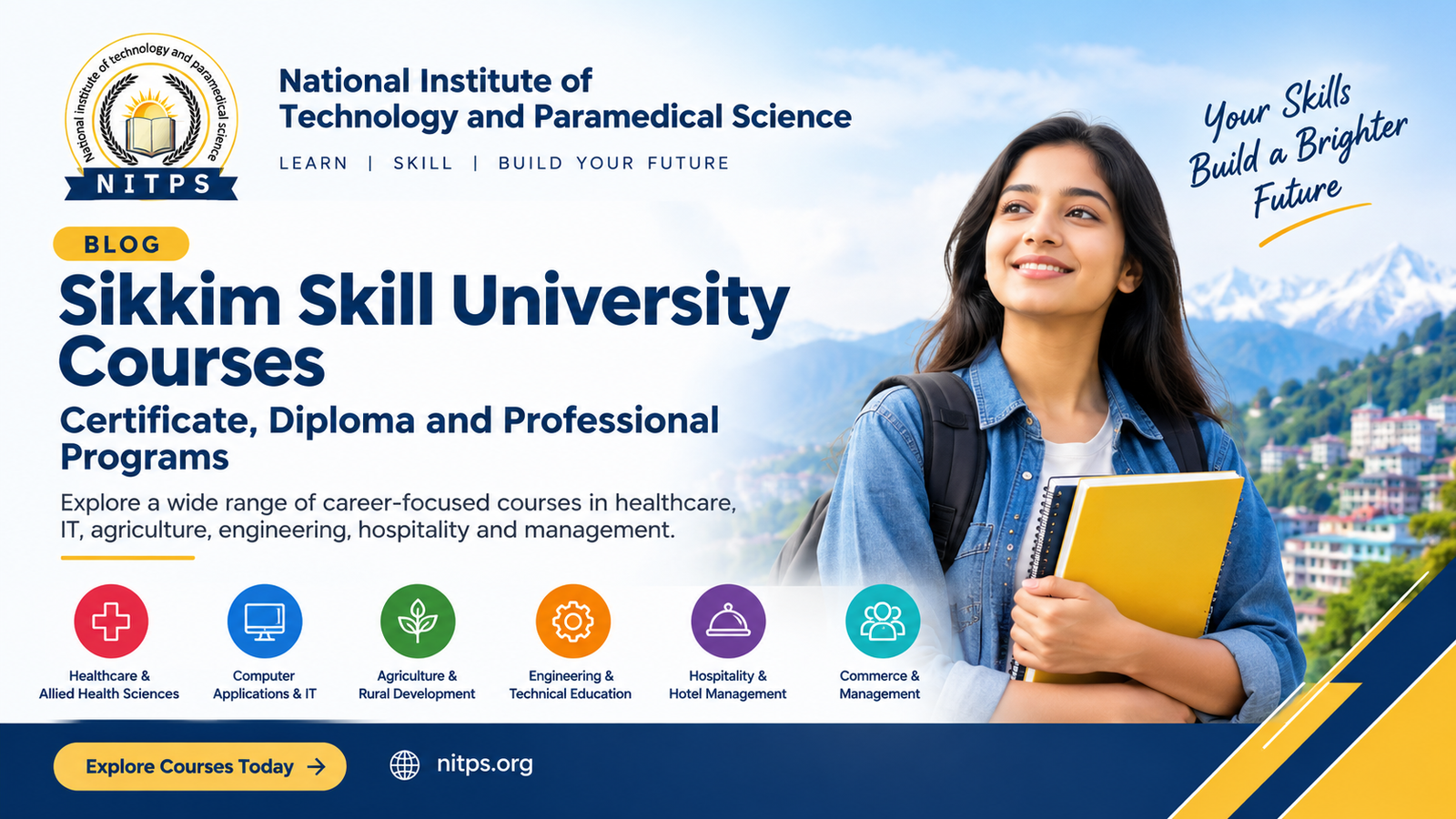
Choosing the right educational program can help students develop valuable knowledge, practical abilities, and professional confidence. With changing industry requirements, many learners are exploring skill-based education and specialized courses that align with their career interests. Sikkim Skill University offers programs across several academic and professional fields, providing learners with opportunities to explore different areas of study.
Through the NITPS website, prospective learners can explore information about Sikkim Skill University courses, including programs related to healthcare, computer applications, engineering, agriculture, hospitality, and management. The course categories help students identify subjects that match their interests and future learning goals.
What Is Sikkim Skill University?
Sikkim Skill University is an educational institution located in South Sikkim, India. Its academic offerings cover a variety of disciplines, including vocational, technical, professional, and skill-oriented education.
The university's course portfolio includes multiple fields of study, allowing learners to investigate educational options based on their qualifications and interests. Students should review the official course information, eligibility requirements, study mode, and program details before applying.
To explore available programs, visit the Sikkim Skill University page on NITPS.
Popular Course Categories to Explore
1. Allied Health Sciences and Healthcare
Healthcare education attracts learners interested in supporting medical professionals and healthcare services. Depending on the specific program, allied health courses may cover laboratory procedures, diagnostic technology, patient support, and other healthcare-related subjects.
Students interested in this field can explore programs such as Medical Laboratory Technology, Radiology and Imaging Technology, Dialysis Technology, and Operation Theatre Technology where available.
Before enrolling, check the required educational qualifications, practical training arrangements, and applicable professional recognition for the selected course.
2. Computer Applications and Information Technology
Digital skills are useful across many industries, including education, administration, business, and technology. Computer application courses can introduce learners to office software, information systems, computer fundamentals, and other relevant technical subjects.
Depending on the available course structure, students may explore areas such as:
- Computer applications and office automation
- Information technology fundamentals
- Software and digital skills
- Computer-related professional training
- Information and library management systems
These programs may suit learners seeking to strengthen their computer knowledge or develop additional skills for administrative and technical roles.
3. Engineering and Technical Education
Technical education can help learners understand equipment, engineering principles, maintenance practices, and industry-related processes. The appropriate subject depends on the learner's existing qualifications and career objectives.
Students exploring engineering and technology programs should carefully compare course duration, practical components, entry requirements, and the qualifications awarded on successful completion.
4. Agriculture and Agricultural Sciences
Agriculture remains an important sector for rural development, food production, and entrepreneurship. Agricultural education can introduce learners to farming methods, crop management, agribusiness, and rural development concepts.
Students interested in agricultural work or rural enterprise can explore relevant agriculture-related programs listed on the university page. They should review the syllabus to understand the specific knowledge and skills covered.
5. Hotel Management and Hospitality
Hospitality courses focus on the knowledge and service skills needed in hotels, resorts, restaurants, and related businesses.
Depending on the program, subjects may include front office operations, housekeeping, guest relations, food and beverage service, and hospitality administration.
Learners interested in customer service or hospitality management should compare the available certificate and diploma options and verify whether practical training or industry exposure is included.
6. Commerce and Management
Commerce and management education can help students build a foundation in business operations, accounting, administration, finance, and organizational management.
These subjects may be useful for learners interested in office administration, business support, entrepreneurship, or further studies. The right program will depend on prior education and the learner's professional goals.
The NITPS page provides access to a range of academic departments, making it a useful starting point for comparing available course categories.
Benefits of Exploring Certificate and Diploma Courses
Certificate and diploma programs can provide a structured way to study a particular subject. However, the value of any qualification depends on the course content, institution, awarding authority, and the requirements of the learner's intended career.
Potential benefits include:
- Focused learning: Study a specific subject rather than a broad range of unrelated topics.
- Skill development: Build knowledge relevant to a chosen area of interest.
- Career exploration: Understand the skills associated with different occupations.
- Flexible choices: Compare programs according to duration, eligibility, and study arrangements.
- Further learning: Identify opportunities to continue studying, subject to the relevant admission requirements.
Before choosing a program, confirm that its qualification is suitable for your intended employment, further education, or professional registration.
How to Choose the Right Sikkim Skill University Course
Selecting a course requires more than comparing titles. Consider these factors before making a decision.
1. Identify your interests. Decide whether you want to study healthcare, IT, agriculture, engineering, hospitality, management, or another field.
2. Check eligibility. Review the minimum educational qualification and any additional admission conditions for your chosen program.
3. Compare course content. Read the syllabus to understand the subjects, practical components, and expected learning outcomes.
4. Confirm the study mode. Check whether the course is offered online, offline, or through another approved arrangement.
5. Verify the qualification. Confirm the awarding institution, certificate or diploma details, recognition status, and suitability for your intended career.
6. Review fees and duration. Ask for the current course fee, total duration, examination requirements, and any additional charges before registering.
Following these steps can help you make an informed educational decision.
Why Visit NITPS to Explore Courses?
The NITPS website provides a platform for exploring different certificate and diploma course categories. Learners can review course information and investigate options across healthcare, computer applications, agriculture, engineering, hospitality, and other professional fields.
The website also provides access to individual course listings, helping prospective students examine program-specific details rather than relying only on general descriptions.
Visit the relevant page to review available options:
Explore here: Sikkim Skill University Courses at NITPS
Frequently Asked Questions
Which courses can I explore through the Sikkim Skill University page?
The page lists several academic departments, including allied and healthcare sciences, computer applications, engineering and technology, agriculture sciences, hotel management, library and information science, and commerce and management. Availability varies by program.
How can I check eligibility for a course?
Visit the relevant course listing and review the admission requirements. If any information is unclear, contact the institution or authorized admissions team for confirmation.
Are certificate and diploma courses the same?
No. They may differ in duration, curriculum, entry requirements, and qualification level. Review the details of each program before deciding which is suitable.
What should I verify before enrolling?
Confirm the course syllabus, fees, study mode, assessment requirements, awarding authority, recognition status, and whether the qualification meets your professional or academic goals.
Conclusion
Exploring Sikkim Skill University courses can be a useful first step for learners comparing educational opportunities across healthcare, IT, agriculture, engineering, hospitality, and management. The most suitable program will depend on your interests, qualifications, and future plans.
Take time to compare course details and verify admission requirements before enrolling. Visit NITPS to explore the available programs and identify the options that best match your learning objectives.